International defense focus in the heart of Sweden’s naval capital
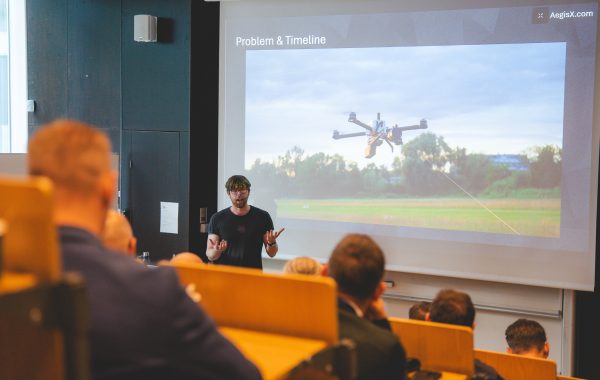
For three days, November 4-6, experts from across Europe gathered in Karlskrona to jointly develop future naval defense capabilities. The event – NATO Mini TIDE Sprint Maritime 2025 – was organized by NATO ACT (Allied Command Transformation), in close collaboration with Marine Technology Center of Sweden (MTC) and Blekinge Institute of Technology (BTH) as local hosts.
Mini TIDE Sprint is a focused version of the larger NATO forum TIDE Sprint, where interoperability – the ability to act effectively together across national borders – is at the center. Here, representatives from alliance member countries, defense industry, and academia gather to solve concrete challenges regarding command capability, digital transformation, and technology shaping future naval operations.

A location that enhances the content
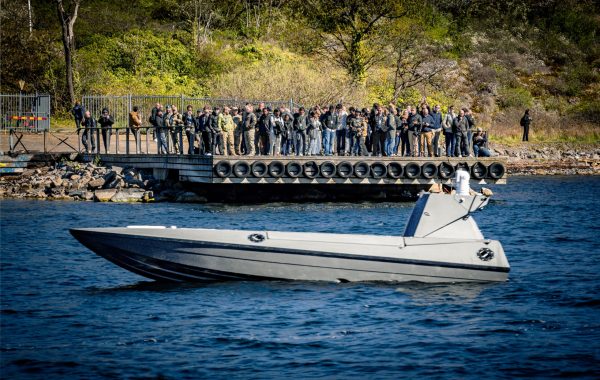
Many of the participants visited Karlskrona for the first time. Despite a gray and windy November day, the reactions were unanimous – the environment impressed. With the sea as a neighbor, and ships, quays, and defense activities within sight, both the city and the location became a natural backdrop for the conversations.
Parts of the program were held at Dockside Karlskrona, a venue that literally rests over the water. For an event where maritime defense, technology, and collaboration are in focus, the location created the right framing – without needing to make a fuss about it.

An acknowledgment of Karlskrona’s role
The choice of Karlskrona for Mini TIDE Sprint is a clear recognition of the region’s increased strategic importance. Here exists a concentrated marine technology ecosystem where defense, academia, and industry collaborate. During the event, representatives participated from, among others, the Royal Navy, Swedish Defence University, Rheinmetall, Saab, EU SATCEN, IBM, Systematic, and several NATO nations’ navies and cyber defense units.
The event was made possible thanks to initiatives from Commander Peter Lendrop, in dialogue with NATO and with strong support from local actors.
The evening before the conclusion, participants gathered for a joint dinner at the Naval Officers’ Mess in Karlskrona, with Saab Kockums as host – an appreciated conclusion in a historic environment, where conversations continued in an informal atmosphere.
MTC’s role – host, enabler, and collaboration hub
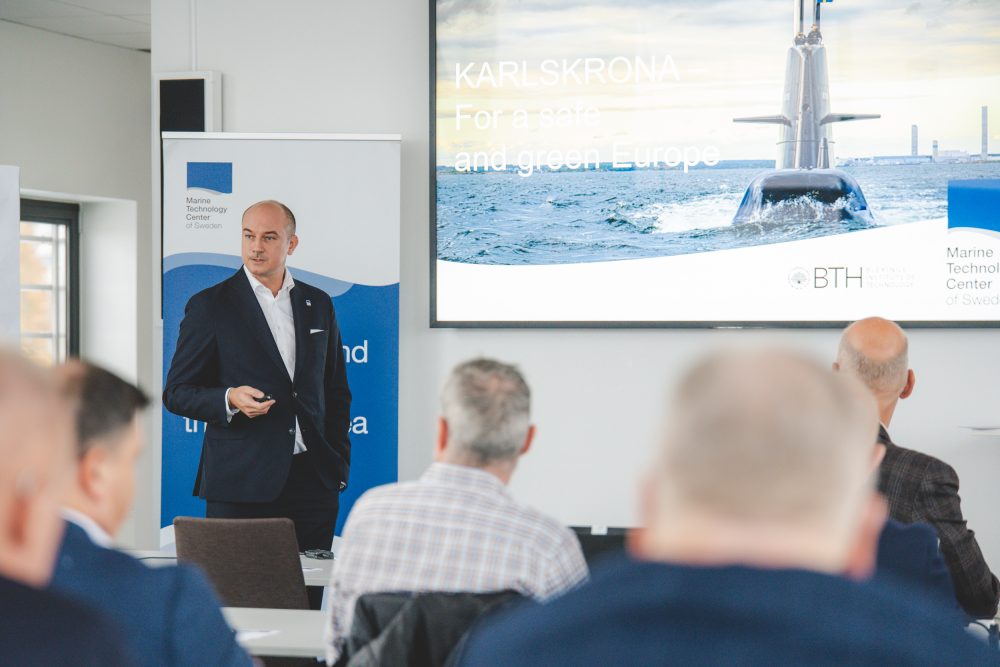
During the week, David Appelberg, Operations Manager at MTC, and Oskar Frånberg, Research Leader at MTC’s research program and Associate Professor at BTH, presented how MTC and BTH contribute to applied innovation, research, and international cooperation in marine technology.
“Hosting NATO’s Mini TIDE Sprint here in Karlskrona is not just a recognition of the expertise we have gathered in the region, it’s a strategic step for all of Sweden. We are in the midst of a technological shift where AI, autonomous systems, and digital solutions are reshaping how we build naval capabilities. When NATO wants to discuss future interoperability, this is where – in Sweden’s naval capital – they should be.
We have welcomed experts from military, industry, and academia over three days. It has been a unique opportunity to showcase our work, but also to listen to concrete needs, build relationships, and lay the foundation for new collaborative projects. For us, it is clear: collaboration across borders is not an option – it’s a necessity. And our role as a facilitating hub in this collaboration is more important than ever.”
— David Appelberg, Operations Manager at MTC
Next steps
For MTC, the event signifies a strengthened position as an international partner in applied marine technology – with continued focus on developing technologies, networks, and knowledge for future defense, innovation, and sustainable marine environments.