Inga loggposter finns ännu.
Inga loggposter finns ännu.
Inga loggposter finns ännu.
Inga loggposter finns ännu.
Are you ready to test your ideas in reality?
Register for MTC’s student challenge and become part of a team working with real cases from the industry. Whether you already have an idea or are just curious – we want to hear from you.
MTC’s student challenge is an arena where theory becomes practice, and visions are shaped into solutions. Here, students, companies, and researchers meet in interdisciplinary teams to tackle real cases from the marine technology sector – everything from autonomous vessels and AI solutions to environmental monitoring and new material technology.
As a student, you get the opportunity to work with real challenges, develop your competence, build valuable contacts, and create something that actually makes a difference.
As a company, you contribute with a real need and get back new ideas, new perspectives – and perhaps your next recruitment.
Together we build bridges between academia and industry.
Together we shape the future of marine technology.
Being part of MTC’s student challenge is more than a school project – it’s a chance to take your ideas all the way to reality. You and your team get to work with real challenges from companies and organizations within the marine technology sector. Together with coaches, experts, and industry professionals, you develop solutions that can become something real.
It costs nothing to participate. What you need is an idea, a team – and the will to do something real.
MTC’s student challenge is designed so that you as a student get the most out of it – whether you come in with an idea or just with curiosity. Here’s how it works:
You can also register without a team and we’ll help you find the right team. We’re looking for drive, ideas, and the will to solve real problems.
Selected students are invited to a startup day where you get to meet other participants, companies, and MTC’s team. Don’t have a finished idea? No problem – we’ll help you brainstorm something together.
Each team gets the opportunity to pitch their solution to a jury consisting of companies, experts, and innovation leaders. Four teams are selected to advance to the next phase.
The selected teams get time, support, and coaching to further develop their solution. It could be about technology, business model, sustainability, or something completely different – it depends on your ideas and needs.
At the end of the challenge, a final presentation is held where the teams showcase their results. Afterwards, there’s an opportunity to continue developing the project within MTC’s network – several teams have taken their ideas further to real prototypes and collaborations.
Here are the most common questions and answers.
Whether you already have an idea or are just curious – we want to hear from you.
Yes, it’s fine if it’s something that’s already started.
Yes, you need to be a registered student at BTH to participate.
No, the requirement is that you must be a registered student at BTH. We encourage teams with participants from different educational backgrounds, but it’s not a requirement.
You decide whether you want to be alone or if you want to have more members in the team. The stipend is divided among the number of team members.
The final deliverable should consist of a physical prototype or an advanced digital prototype that clearly shows your solution and its function. The prototype should be sufficiently developed so that those who experience it can easily understand the concept and its potential.
In addition to the prototype, you should also deliver a technical report that describes your solution, including design choices, technical aspects, and any tests you have conducted. The report should provide a clear picture of how and why your solution works.
Are you ready to test your ideas in reality?
Register for MTC’s student challenge and become part of a team working with real cases from the industry. Whether you already have an idea or are just curious – we want to hear from you.
You can register yourself or together with a team
What you need
MTC’s student challenge gives companies and organizations a unique opportunity to:
Students look at problems with fresh eyes – often in completely different ways than one is used to.
Show yourselves as an innovative and attractive company for future employees.

Several companies have recruited from their own student challenge teams.

By sharing real challenges, you contribute to education, innovation, and the development of Swedish marine technology.
There are several ways to engage as a partner in the student challenge – choose what suits you:
Share a real challenge from your operations. MTC helps you formulate and package the case for the students.
Financial contribution, access to materials, technology, or test environments – everything makes a difference.
Actively participate in the process as a sounding board for a team. It doesn't require much time, but provides great value – for you and for the students.
Four teams are currently in full swing working on MTC’s first student challenge. We look forward to soon being able to share their exciting cases here!
Do you want new perspectives on your challenges?
Participate and contribute to the future of marine technology by formulating a case for MTC’s student challenge. Together with students from Blekinge Institute of Technology, concrete ideas, solutions, and concepts are explored – based on real needs from your operations.
It’s easy to get started, whether you have a finished challenge or just an idea to discuss.
You contribute with insight – we match with the right team.
The result? New ideas, future talents, and concrete development.
Here you can follow the student teams currently participating in MTC’s student challenge. They work together with companies and researchers to solve real challenges in marine technology – with real cases, creative ideas, and full focus.
Petter Eriksson
Amin Afzali
Philip Wollsén Ervius
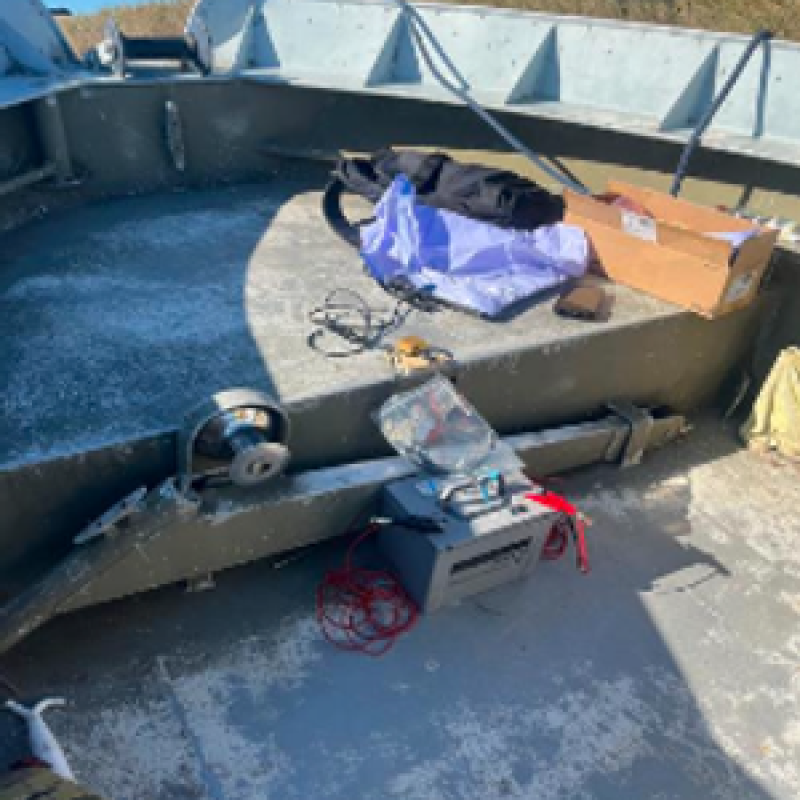
GNSS är navet i modern navigering, men känsligt för störningar och manipulation. OceanSight utvecklar ett förstärkt tröghetsnavigeringssystem (INS) som fungerar även när satellitsignaler sviktar – särskilt viktigt i maritima och försvarsrelaterade miljöer.
Genom att kombinera AI och stora datamängder korrigerar systemet fel i INS i realtid. Det kan självt upptäcka när GNSS-signaler är opålitliga, växla över till INS, och sömlöst återintegrera GNSS när tillförlitligheten återvänder. Målet är robust, kontinuerlig positionering – utan att vara beroende av extern signal.
Alexander Alfaro
Viktor Fransson
Tobias Gustafsson
Simon Lindqvist
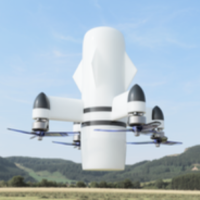
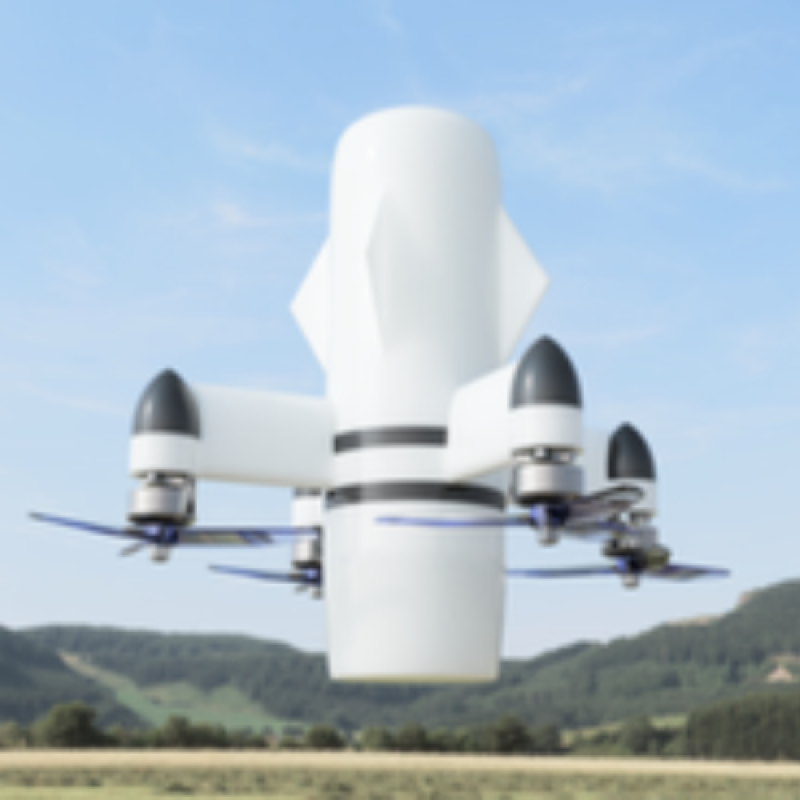
Skarven är ett kostnadseffektivt system för att fysiskt bekämpa fiendedrönare. Systemet består av en snabbflygande multirotor utrustad med kamera och inbyggd dator. Med hjälp av bildigenkänning identifierar drönaren ett mål, och genom fysisk kollision neutraliserar den hotet helt autonomt – enligt principen “fire and forget”. All beräkning sker lokalt, utan behov av extern kommunikation.
Målet är att skapa ett lättanvänt och prisvärt system, där varje drönare kostar omkring 8 000 kronor i material och kan återanvändas delvis även efter kollision. Skarven är modulär, baserad på lättillgänglig konsumentelektronik, vilket möjliggör produktion i större skala.
Emil Knutsson
Saif Kadahin
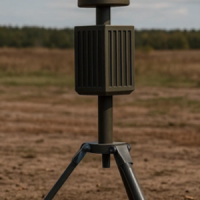
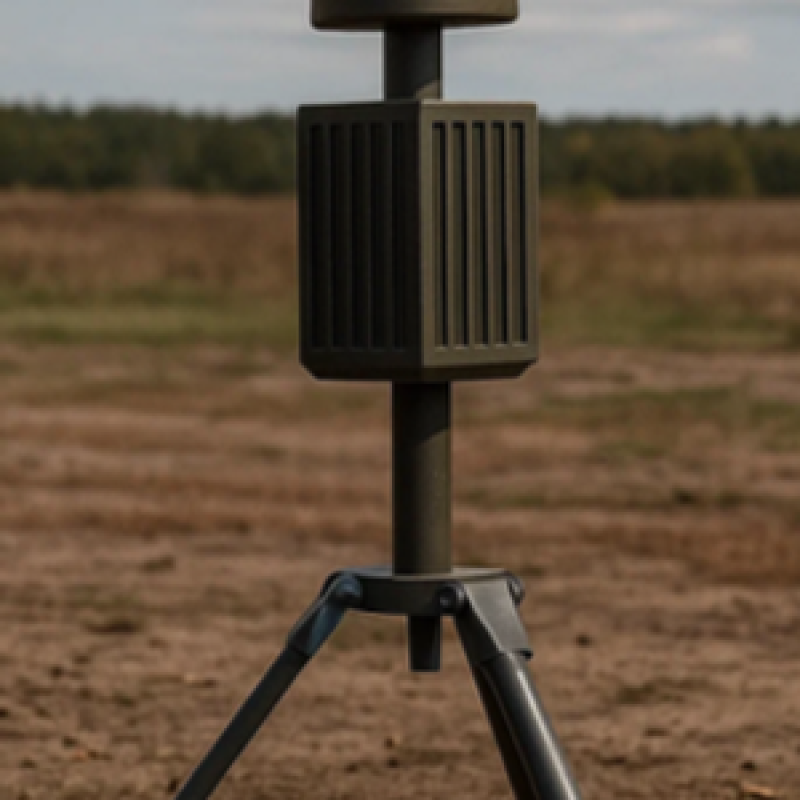
PlutonRadar – Sentry 90 är ett radarsystem utvecklat för att upptäcka svåridentifierade luftburna hot i komplexa och teknikintensiva miljöer.
Systemet har utvecklats med insikter från operativa miljöer där snabba beslut och tydlig lägesbild är avgörande.
Birk Brunell
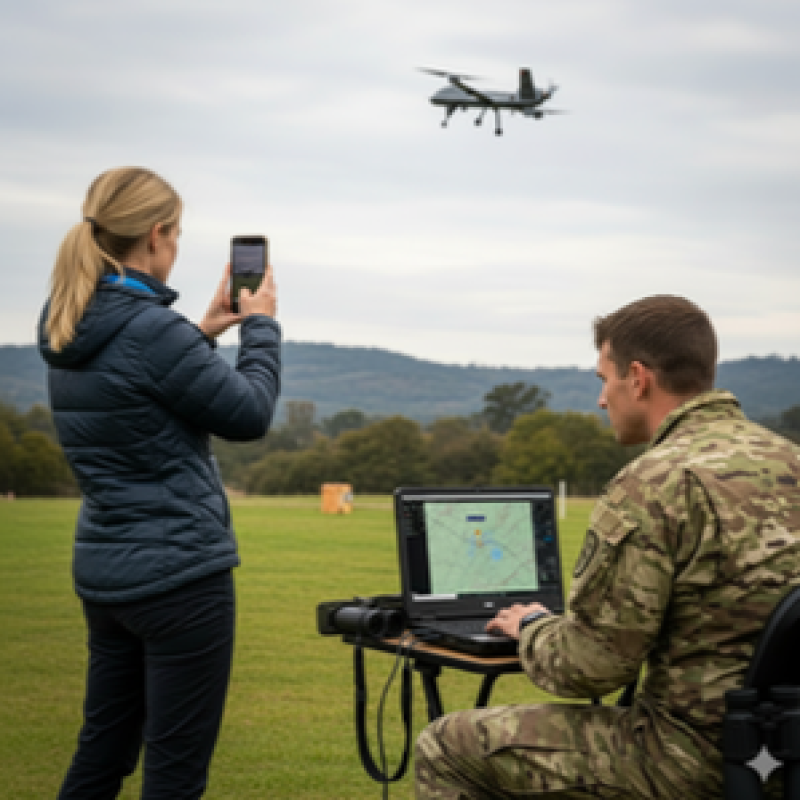
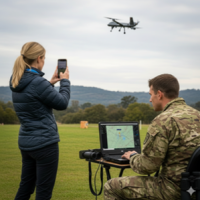
RPAS (Remotely Piloted Aircraft Systems), särskilt långräckviddiga drönare, har förändrat krigföringens villkor. Vaka adresserar detta växande hot med ett nytt tänk: att använda befintlig infrastruktur – främst smartphones – för att spåra hot från loitering munitions i realtid.
Genom att kombinera mobilsensorer och crowdsourcad rapportering erbjuder Vaka ett brett, kostnadseffektivt skyddsnät utan behov av ny hårdvara. Det integreras smidigt i existerande övervaknings- och underrättelseplattformar, och kan både ta emot och skicka vidare data från andra källor – vilket förbättrar både precision och räckvidd.